Networking in academia: building a career with strategy!
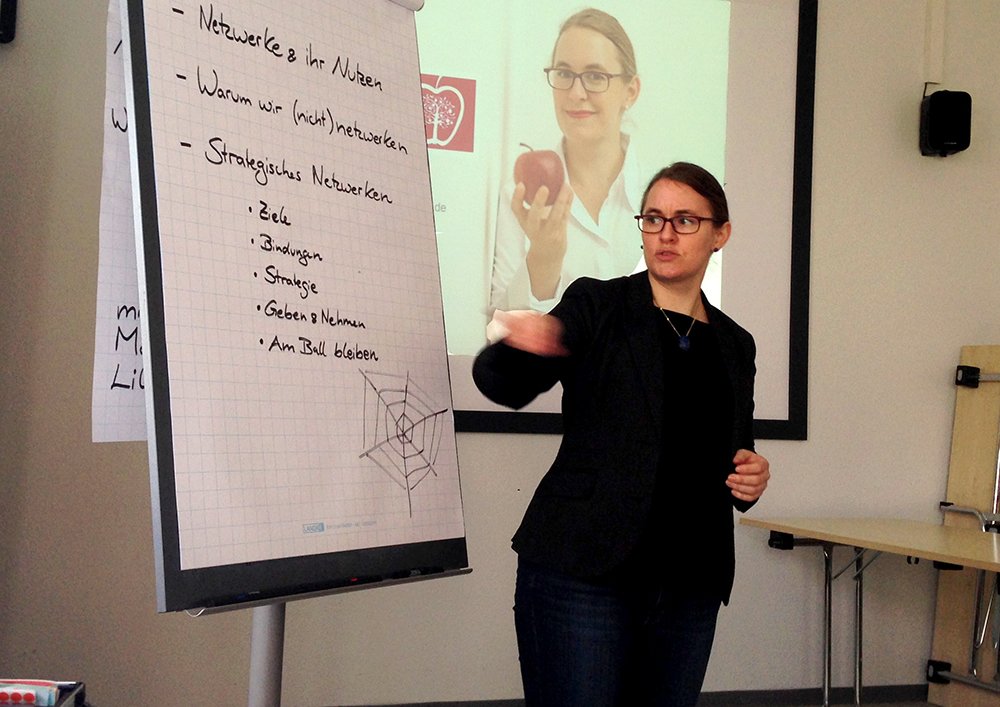
Career workshop for young women researchers
Last week, Marietta Gädeke delivered the seminar Networking in academia for the Women’s Office at Mainz University. Thirteen participants attended with plenty of questions: what exactly is networking in academia, and how does it work? How do you avoid feeling sleazy? How do I enter the circles I want to join? Marietta begins with some basics: what exactly does it mean to have a network? First, there are the networks in everyday life: friends, family, colleagues. Second, there are social networks. What matters is who can see me. Visibility is decisive. Only those who are seen can be found by others. My first lesson: change my Facebook name! My alias should become Saskia Höfer again 😉 And how do Xing and LinkedIn differ? Are there others? Specifically for networking in academia: Academia.edu, Researchgate and speakerinnen.org
Networking in academia: the cloud of skills
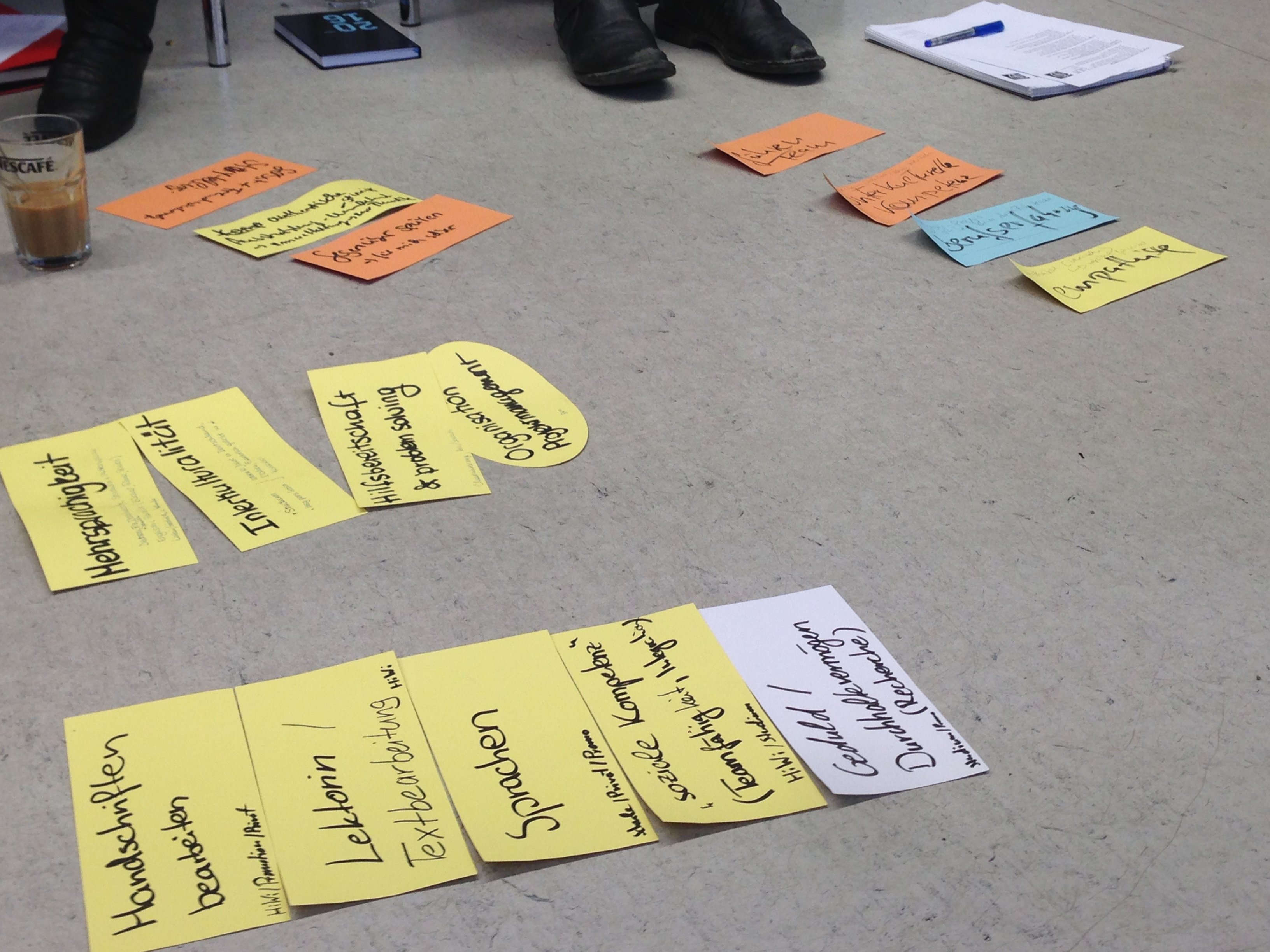
Networking does not mean “I want something”, but also “I have a lot to offer”. But what? First ask yourself: what skills do I have? Participants write three of their skills on cards and introduce themselves through their abilities in small groups. It is lovely to see how conversations arise immediately. Body language comes into play: a casual touch of a hand here, a strong gaze there. The participants‘ skills cloud Naturally, all participants had subject-specific expertise. But what exactly does expertise mean? A doctoral candidate in history realised that reading handwriting was her great strength, a sought-after skill in historical research. The second step: identify situations in which participants had demonstrated their skills. Storytelling is the key. People who tell a story stay in listeners‘ memories longer. A researcher who had worked as an event planner in Africa realised she could still mention this to her colleagues in biopharmacy. Who knows a biopharmacist who has organised weddings? It is an interesting conversation opener and memorable.
Granovetter: weak and strong ties in a network
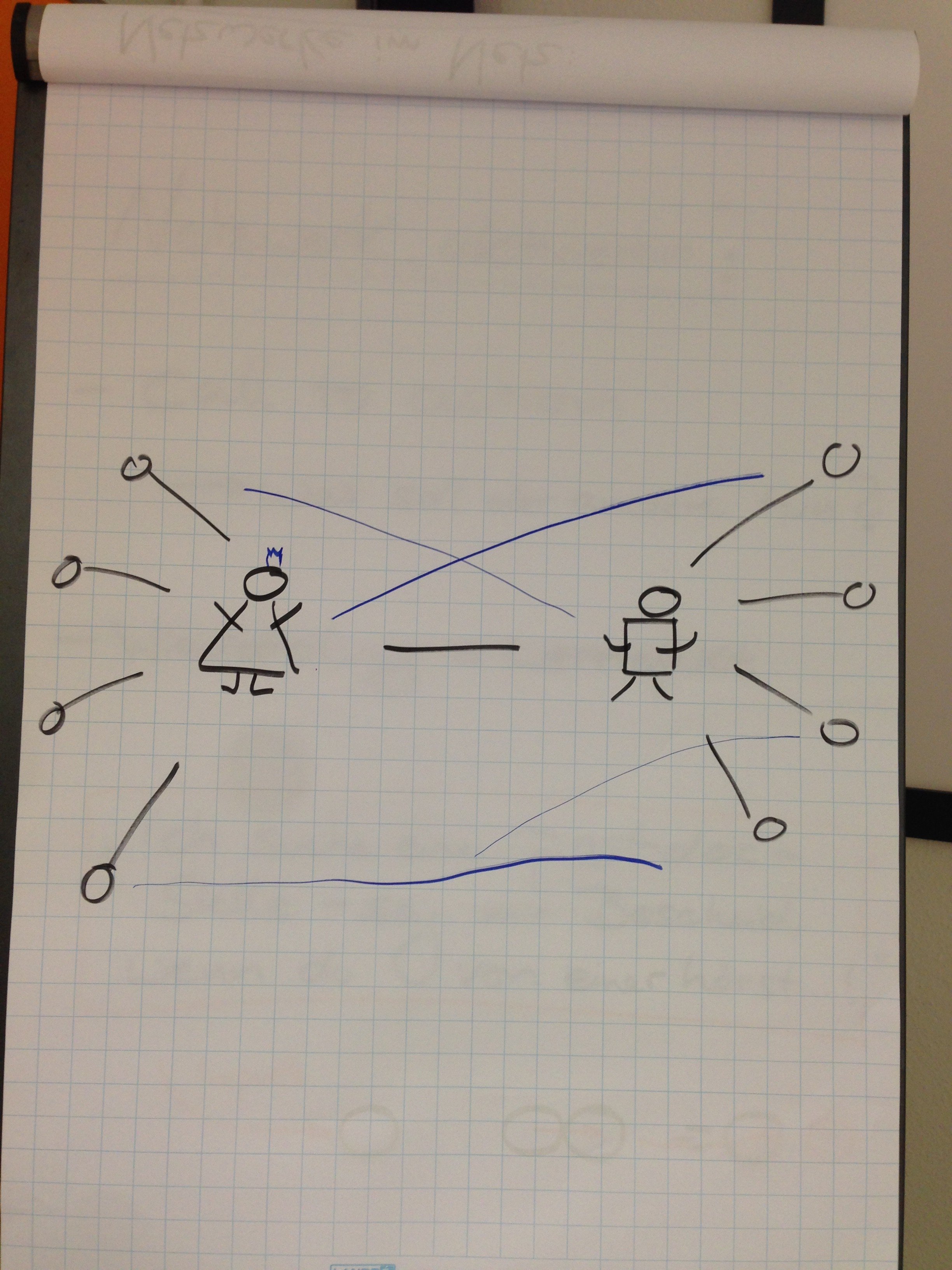
So this is what my network looks like? Marietta hands the group a network analysis tool showing different categories: friends/family, colleagues, professors, former fellow students. It helped participants visualise their own networks. Strong and weak ties—who is asked first when a problem arises? Each participant draws her network on flipchart paper. Next, each considers which ties in her network are strong and which are weak. The strength of a tie depends on the intensity of contact with another person. Close friends and family, for example, are strong ties; former colleagues and casual acquaintances tend to be weak ties. Marietta explains that weak ties are not bad—quite the opposite. A weak tie may conceal a valuable network that can be activated and drawn upon. New contacts are easily made here when someone is an authority in their field. A sports scientist and a psychology doctoral candidate seem at first to have little in common. But if the sports scientist wants to investigate the psychological effects of a particular sport, the psychology doctoral candidate is recognised as an expert and approached about her field. An initially weak tie becomes a strong tie for academic networking. The two act as experts in their fields for one another.
So how do you network?
With your skills and a good story to present them, little can go wrong. The important thing is to be friendly and approach people. Instead of constantly looking at your smartphone, ask others interesting questions. As the old marketing motto goes: “Whoever asks, leads!” But isn’t it strange if I only network because I want something, asks one participant. That is already the wrong attitude, Marietta replies, because first it is simply a pleasant conversation both enjoy. Whether something comes of it is a separate question. Everyone brings skills the other person may need. There is no reason to feel bad.
Networking in academia: The next steps to success
At the end of the seminar, Marietta asks the group what they will do next. Get in touch with that contact after all, even though it is very late, the first calls out. Sign up for Xing, says another. Write long-overdue emails and print business cards. And are they looking forward to the next networking meeting? Yes, says a sports scientist. I never thought networking in academia could be fun! But I am really looking forward to it. The group agrees: we want to become more active! Do you already know our 5 tips against dark rhetoric and manipulation? No? Then start with our tips against bluffers, those unpleasant self-important people you may also meet while networking. Incidentally, if you would also like to work on your own networking , Lilit offers workshops on strategic networking for entrepreneurs and leaders too. Interested? Then simply email the Lilit team.
About the author: Saskia Höfer is a freelance journalist, copywriter and argumentation expert. She studied German and book studies at Johannes Gutenberg University.Photo rights belong to the author.