Lilit Insight
French and Germans beyond the clichés: an interview with director Tom Sommerlatte
Journalist Saskia Höfer spoke with director Tom Sommerlatte for Lilit about his debut film “Im Sommer wohnt er unten”: the small differences in mentality between Germans and French, language, attitudes to work on set and the success of his film.
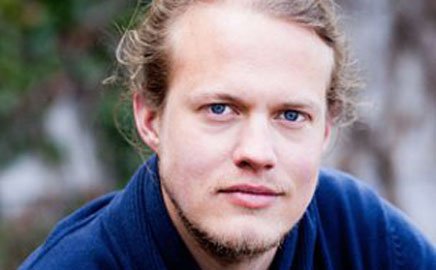
Tom Sommerlatte on cinema, France and Germany This year, Lilit celebrates its eighth anniversary! To mark the occasion, journalist Saskia Höfer spoke with director Tom Sommerlatte for Lilit. His debut film “Im Sommer wohnt er unten” remained in German cinemas for months after its release and was shown this year at the Kino!2016 festival in New York. The Berlin director and actor creates not only a moving drama about siblings but also a comedy about subtle differences in German and French mentalities. Half-French himself, he spoke with Saskia Höfer about language, attitudes to work on set and his film.
The languages of great nations
Dear Tom, thank you for your time. Do you know this wise, surely well-meant advice for women: “Speak French to a man if you want to keep him; speak German if you want to get rid of him!” (laughs)? Which language do you find more beautiful? Tom Sommerlatte: Broadly speaking, I would first say French. It is simply a much more songlike language. But we must not forget that German is a language of poets and thinkers. Both languages represent great nations. The French are said to be very proud of their language. We hear that less about Germans. Why might that be? Tom Sommerlatte: The French have always been proud of their language and have always seen themselves as a world power. Adopting another language was probably never conceivable. There is even an institution, the Académie française, that assigns a French equivalent to every foreign word. An email, for example, is called courriel électronique and a computer is an ordinateur. Apart from vocabulary, what would you say is the biggest difference between German and French? Tom: Clearly, German sounds much harder and has a lot of staccato. That “bam-babam” sound. French is very melodic, almost as if it had been composed. Take the word for butterfly. In German, “Schmetterling” suggests the creature strikes or crashes its wings. “Papillon” seems to fly more lightly. 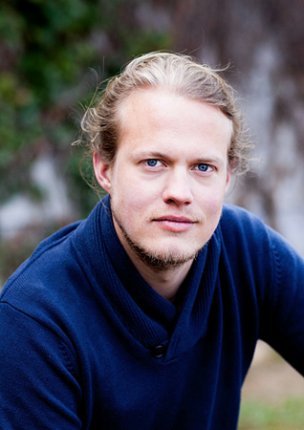 Director Tom Sommerlatte (c) Marcus Gaertner
German directness vs. c’est la vie!
We often hear that Germans are very direct. Actor Christoph Waltz once said, “Germans are like a battleship.” Have you encountered that cliché? Tom Sommerlatte: Of course, but as you say, it is primarily a cliché. The nice thing about clichés is the grain of truth in them. Directness is very good for technical instructions. Our language can combine several words into one. Let me invent a word: “Stuhlbeinschraube” — chair-leg screw — would be one word. In French you would have to paraphrase: the screw for the chair leg. What do French people particularly value in life? Tom Sommerlatte: We have to be careful not to slip into clichés. I think, generally, a French person is more likely to say: I want to be happy in the moment. I will not go through hell to afford a fancy car. But as I said, you have to be careful with clichés. What about you: do you work toward a goal or prefer to enjoy the moment? Tom Sommerlatte: A mixture of both. Usually I work toward something. When writing a screenplay, I want things to move quickly, so I forgo many breaks. But French people do that too — “fighting for something” (laughs). What do you mean? Tom Sommerlatte: I mean their attitude to strikes. The French fight much harder to preserve their rights and everyday quality of life. They are more likely to say, “No, I don’t feel like busting my ass all day.” France’s welfare state is much larger and more expensive than Germany’s.
Tom Sommerlatte and intercultural work on set
In your film “Im Sommer wohnt er unten” you worked with a multilingual team. Did you observe “German planning mania” versus the French “let’s just get on with it”? Tom Sommerlatte: There were two speeds. The Germans tended to set the pace, but they held positions that allowed them to. We had also worked together before. It was my first time working with the French team, so we had to find our rhythm. I would say mentality played a part. But I have also worked on German sets and thought: what a sluggish bunch! Were there difficulties with a multilingual team? Tom Sommerlatte: A few difficulties here and there. We agreed that English would be the language on set. But in the end, the set was like the film: all three languages — German, English and French — were spoken. Ultimately, though, there was never a problem! 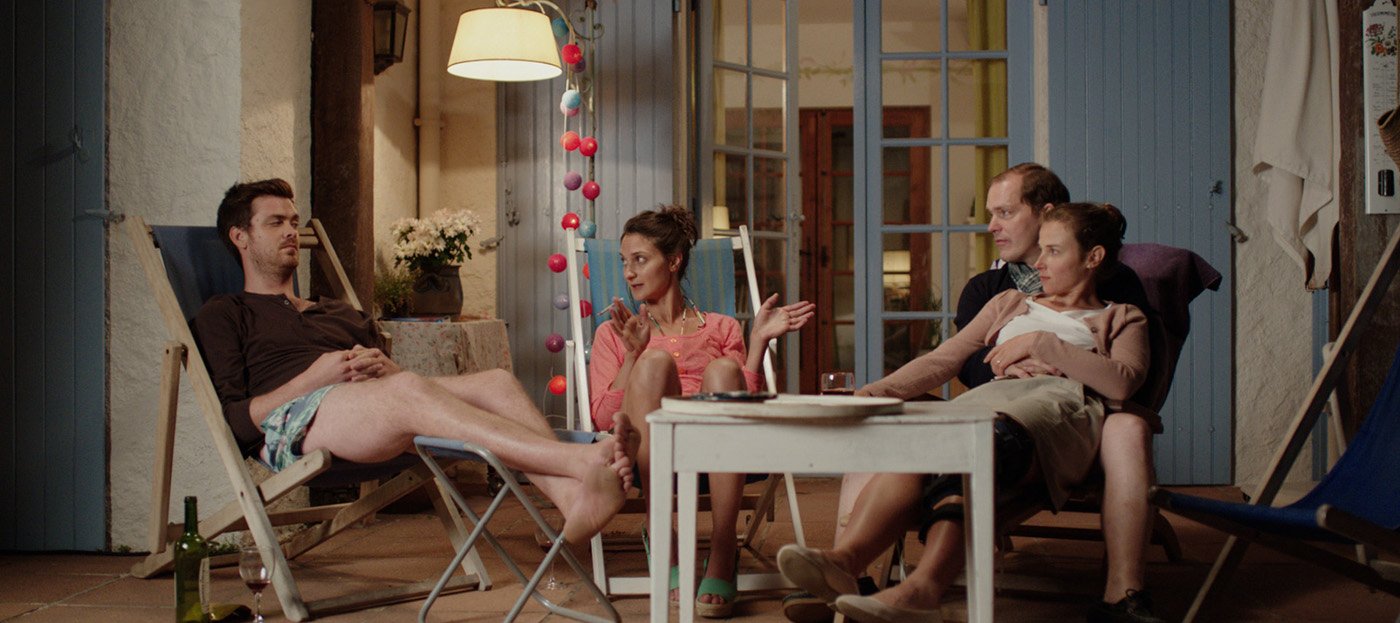 Snapshot: Im Sommer wohnt er unten (c) Osiris Media
“I am the boss minus two!” — hierarchy in Germany and France
Did your status as director help with communication? Tom Sommerlatte: Absolutely. Hierarchy is far more pronounced in France than in Germany. On set especially, the director holds the team together. If he is an asshole, the atmosphere will be bad. If he radiates good spirits, the set follows. You can compare it to a conductor holding all the instruments together. Speaking all the languages helped enormously too; otherwise I could not have talked to people that way. How else does hierarchy show itself in France? Can you give an example? Tom Sommerlatte: There is an expression I hear quite often: “I am the boss minus two.” It means I am two positions below the boss in the hierarchy. Elites are also very pronounced. Some universities are very hard to get into. But once you are in, every door is open. For example, French President Hollande is an ENA graduate (ENA stands for École nationale d’administration). If you did not attend such a university, you have no chance of becoming president.
Marketing across borders: stars, films & festivals
What reputation do German films have in France? Tom Sommerlatte: Their reputation is improving, but they are still seen as rather staid and not particularly innovative or groundbreaking. You can see this at Cannes, which has not shown German films in recent years. German cinema does have a presence in France, but unfortunately it mostly deals with the Second World War. That works well but will not improve its reputation; it remains a cliché. This year, a German film is screening at Cannes for the first time in a while — incidentally, the first German film by a woman director to compete for the Palme d’Or. Have you received feedback from French audiences on “Im Sommer wohnt er unten”? Tom Sommerlatte: We presented the film at the Festival of German Cinema in Paris and won the audience award. So much for boring and staid. Tom Sommerlatte: (laughs) We just do not have a distributor yet. A German film that apparently is not German enough. (laughs) A film in German without French stars, and that is difficult to market. France produces films such as “Amélie” and “The Intouchables.” How do you see yourself in the context of French cinema? Tom Sommerlatte: Oh. I would say “Im Sommer wohnt er unten” is neither “Amélie” nor “The Intouchables.” I would not want to emulate them. I focus more on what connects the two: a beautiful story well told. They did that well, which is why the films succeeded. Dear Tom, thank you very much for the conversation. Interview by Saskia Höfer.
Intercultural competence with Lilit
Curious about culture and intercultural experiences?
- Read here what to on a business trip to India on Independence Day bear in mind
- Which 5 things every expat in Israel needs to know
- And find out what Yom Kippur holiday is about
Starting business relations with France and want to make the collaboration a success? Then Lilit’s intercultural seminar is exactly right for you! Write to usif you have questions or would like Lilit to support you and your team with intercultural coaching for France, Germany or raising awareness of cultural differences at work — we will be happy to advise you! About the author: Saskia Höfer is a freelance journalist, copywriter and argumentation expert. She studied German studies and book studies at Johannes Gutenberg University. Get advice now
Read more
Related articles.

The next step