
In short
What will you learn in Lilit’s facilitation training?
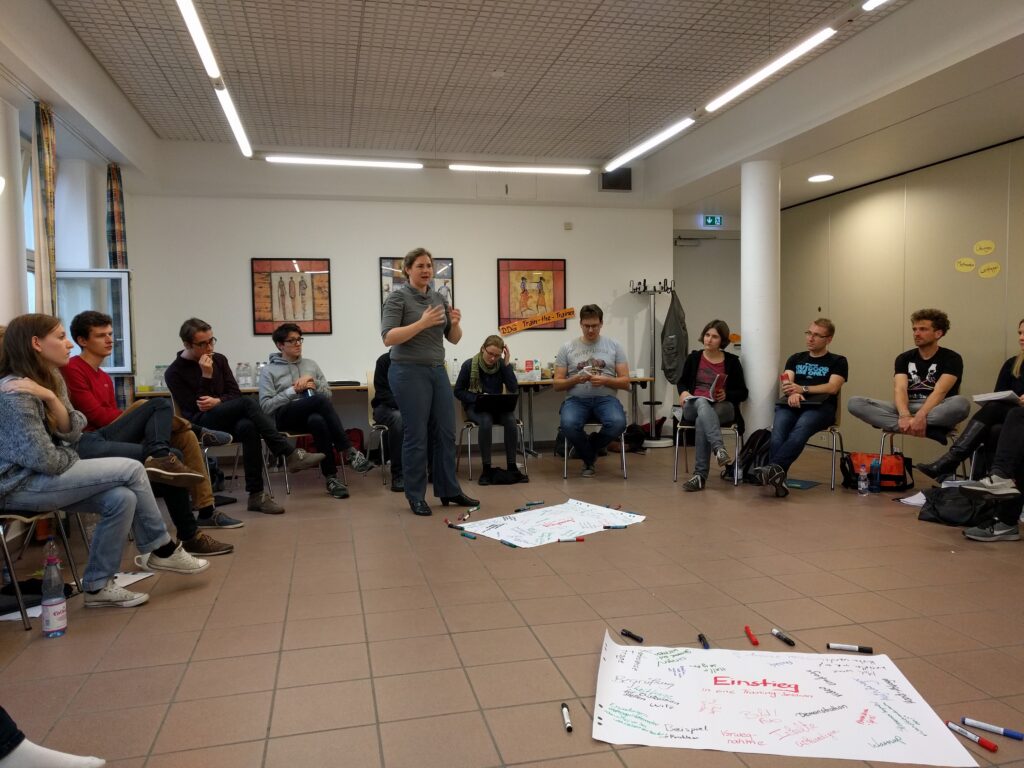
Over two days in person, you plan a meeting from your work and practise facilitation in a simulation. You learn to manage participation, intervene when discussions become difficult and record outcomes with clear next steps.
Learning goals
What you will be able to do
Prepare a meeting
Clarify the brief and goal, build an agenda and identify where the group needs to decide.
Manage participation and conflict
Include quieter voices and respond to interruptions, dominant contributions and tension.
Secure clear outcomes
Summarise decisions and record next steps and responsibilities.
Contents
What we work on
- 01Bring a real meeting: develop a plan and practise intervening and securing decisions.
- 02Clarifying the facilitator’s role, brief and goals
- 03Agendas, guiding questions and timing
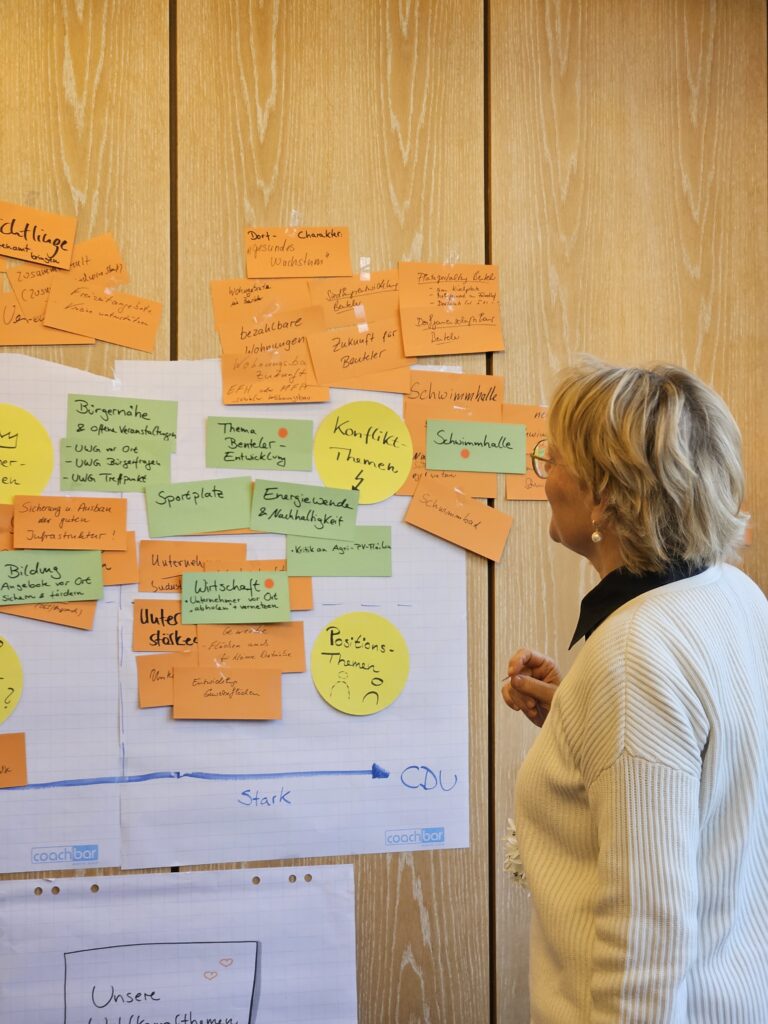
- 04Facilitating plenary discussions and visualising ideas
- 05Managing participation, disruptions and conflict
- 06Recording decisions, responsibilities and next steps
- 07Reviewing AI-generated minutes for privacy, bias and quality
Read the full course description
Practical example: facilitating a difficult meeting
Two people dominate the discussion, others barely speak and time is running out. In the simulation, you take over facilitation: organise the contributions, include more voices and guide the group towards a decision or a clear next step. Afterwards, you discuss with Marietta which interventions helped.
In universities, this can support doctoral programme coordination and working groups across institutions.
Who it is for
- University coordinators and teams working in research-related settings
- Project leads, managers and people facilitating working groups or committees
Typical occasions
- Facilitating a committee across universities
- Bringing different interests together in a workshop
- Preparing and recording a decision in a meeting
Process
- 1 · PrepareBring a real meeting and develop a facilitation plan.
- 2 · PractiseFacilitate a simulation and receive feedback on your interventions.
- 3 · TransferRevise your plan for the next meeting and discuss how to review draft minutes.
Testimonials
What participants say
Testimonial
The public speaking seminar really met my expectations. It was incredibly interesting and so much fun. Thank you!
The public speaking seminar exceeded my expectations. I was glad we had so many practical exercises, supported by the necessary theoretical background.
Frequently asked questions
Good to know
Who is the training for?
People who lead meetings, workshops or committees in university coordination, project management or leadership.
Can we prepare our own committee meeting?
Yes. Bring an upcoming or recurring meeting and rehearse part of your own agenda.
How long is the training?
The in-house programme consists of two days in person. Exercises are adapted to your group and working context.
Next step